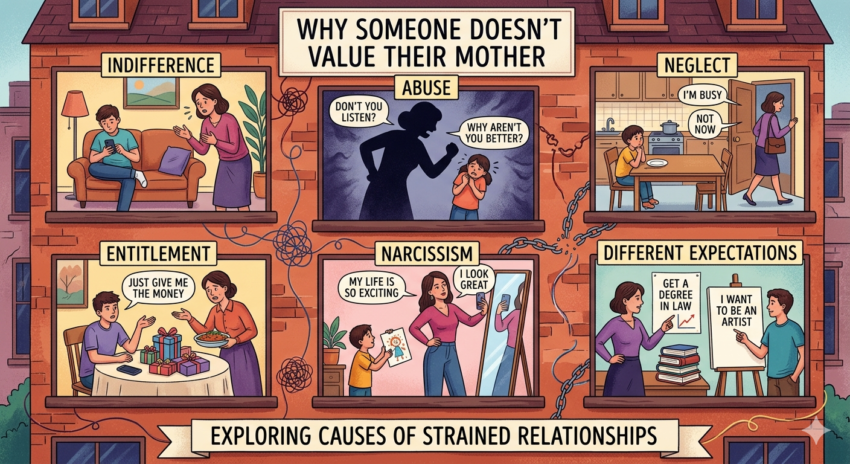
7 Psychological Reasons Why Some Children Emotionally Distance Themselves From Their Mother
The bond between a mother and child is often described as one of the strongest emotional connections in human life. From infancy, mothers usually provide comfort, security, and guidance that shape a child’s emotional development. However, not every relationship between a mother and child remains close throughout life. In some cases, children gradually become emotionally distant from their mothers. This distance can appear as reduced communication, lack of emotional sharing, avoidance of family gatherings, or a feeling of emotional disconnection.
Understanding the psychological reasons behind this behavior is important because emotional distance rarely appears without cause. It often develops over time due to complex emotional experiences during childhood and adolescence. Recognizing these factors can help families rebuild relationships and improve communication.
Below are seven psychological reasons why some children emotionally distance themselves from their mothers.
1. Lack of Emotional Validation During Childhood
One of the most common reasons children distance themselves emotionally is a lack of emotional validation while growing up. Emotional validation means acknowledging and accepting a child’s feelings rather than dismissing them.
For example, if a child expresses sadness, fear, or frustration and repeatedly hears responses like:
-
“You’re overreacting.”
-
“Stop crying, it’s nothing.”
-
“You’re too sensitive.”
Over time, the child may learn that their emotions are not safe to express. When children feel their feelings are ignored or minimized, they may start to suppress their emotions and avoid sharing personal experiences.
As adults, these children often keep their emotional world private. Rather than risking rejection or dismissal again, they create emotional distance from the parent who failed to acknowledge their feelings.
2. Excessive Criticism or High Expectations
Another psychological factor that can create emotional distance is constant criticism or unrealistic expectations. Some mothers, often with good intentions, push their children to achieve perfection in school, behavior, or life goals.
While encouragement can be healthy, excessive criticism can lead children to feel that they are never good enough. Comments like:
-
“Why didn’t you get a higher grade?”
-
“You should be more like your sibling.”
-
“You always disappoint me.”
can damage a child’s self-esteem.
When children feel judged rather than supported, they may begin associating their mother with stress or anxiety. To protect their emotional well-being, they might reduce contact or avoid deep conversations.
In adulthood, this pattern can lead to emotional detachment because the child may still feel that they cannot meet their mother’s expectations.
3. Overly Controlling Parenting
Some mothers try to control every aspect of their child’s life, including friendships, career choices, personal beliefs, or lifestyle decisions. While guidance is an essential part of parenting, excessive control can make children feel suffocated.
Children naturally seek independence as they grow older. If a mother refuses to respect boundaries or constantly interferes with personal decisions, the child may distance themselves to regain autonomy.
Signs of overly controlling parenting may include:
-
Making decisions for the child without discussion
-
Monitoring personal relationships excessively
-
Rejecting the child’s opinions or choices
-
Using guilt to influence decisions
When autonomy is denied, emotional withdrawal often becomes a way for the child to create personal space and protect their sense of identity.
4. Unresolved Childhood Conflicts
Many emotional distances develop because of unresolved conflicts from childhood. These conflicts may involve arguments, punishments, perceived unfair treatment, or painful experiences that were never properly discussed.
Children sometimes carry emotional wounds for years, especially if they felt misunderstood or hurt by their mother’s actions. If these experiences are never acknowledged or resolved, resentment can quietly grow over time.
For instance, a child who felt ignored during difficult moments or experienced harsh discipline may continue to feel emotionally disconnected even as an adult.
Without open communication and healing conversations, unresolved conflicts can become long-term emotional barriers between mother and child.
5. Emotional Neglect
Emotional neglect occurs when a child’s emotional needs are consistently overlooked. Unlike physical neglect, emotional neglect can be subtle and difficult to recognize.
A mother may provide food, shelter, education, and other necessities but still fail to provide emotional warmth, affection, or attention. Children who grow up without emotional support may feel invisible or unimportant.
Signs of emotional neglect might include:
-
Rarely receiving affection or praise
-
Limited meaningful conversations
-
Lack of interest in the child’s hobbies or feelings
-
Minimal emotional support during difficult times
When children feel emotionally disconnected early in life, they may struggle to develop a deep emotional bond with their mother later on.
6. Role Reversal or Parentification
In some families, children are forced to take on adult responsibilities too early. This psychological situation is known as parentification, where the child becomes responsible for caring for the parent emotionally or practically.
Examples include:
-
Acting as a mediator during parental conflicts
-
Taking care of younger siblings constantly
-
Providing emotional support to a struggling parent
-
Handling adult responsibilities beyond their age
While these children may appear mature and responsible, the burden can create resentment and emotional exhaustion.
As they grow older, they may distance themselves from their mother because the relationship feels unequal or emotionally draining. Instead of experiencing childhood freedom, they may feel they had to sacrifice their own needs.
7. Difficulty Establishing Healthy Boundaries
Healthy relationships require clear emotional boundaries. Some mothers struggle to recognize or respect their child’s personal space, privacy, or independence.
This may include:
-
Invading personal boundaries
-
Sharing private information without permission
-
Becoming overly involved in adult life decisions
-
Expecting constant attention or emotional support
When boundaries are repeatedly ignored, children may feel that emotional closeness leads to discomfort or pressure. To protect themselves, they may reduce communication or limit interactions.
Distance can sometimes become the only way they feel able to maintain control over their emotional well-being.
Can These Relationships Be Repaired?
Although emotional distance between a mother and child can be painful, it does not always mean the relationship is permanently damaged. Many families rebuild their bonds through understanding, empathy, and open communication.
Some helpful steps may include:
Honest Conversations
Talking openly about past experiences and feelings can help both sides understand each other better. Acknowledging pain without blame can begin the healing process.
Respecting Boundaries
Allowing adult children to make independent decisions and respecting their personal boundaries can rebuild trust.
Seeking Professional Support
Family therapy or counseling can help uncover hidden emotional patterns and provide tools for healthier communication.
Practicing Empathy
Both mothers and children benefit from trying to understand each other’s perspectives. Parents may realize they unintentionally caused emotional harm, while children may understand the challenges their mothers faced.
Final Thoughts
Emotional distance between a mother and child is rarely caused by a single event. Instead, it usually develops through repeated emotional experiences, communication patterns, and unmet psychological needs.
Understanding these seven psychological reasons—lack of emotional validation, excessive criticism, controlling behavior, unresolved conflicts, emotional neglect, parentification, and boundary issues—can provide insight into why some children withdraw emotionally from their mothers.
Recognizing these patterns does not mean assigning blame. Instead, it offers an opportunity to learn, grow, and rebuild healthier relationships. With patience, empathy, and open dialogue, many families can repair emotional bonds and create stronger connections for the future.